Key Considerations for Trolling Motor Battery Selection
When you set out on a long-term fishing expedition, you need a trolling motor you can rely on. Whether to maintain a good position, fight a minor current, or travel silently along the shore, the best trolling motor is vital for those minute movements that don’t require full engine power.
Plus, the best rule on the water is always: more peace and quiet, better fishing.
The caveat is that a trolling motor is nothing without a reliable power source. Having the best trolling battery can make the difference between a hassle-free trip and a headache on the water.
What to Know Before Buying a Trolling Motor Battery in 2026
The best trolling battery combines reliability with the power to withstand multiple charge cycles. It’s one whose draw power is never mitigated by its weight – buckling under pressure and dying on the water. And the right battery lasts for the long haul, delivering consistent performance over the years.
For all these reasons, lithium batteries have become the most popular choice for anyone searching for the Best Trolling Motor Battery of 2026. However, not all lithium batteries are built the same. Here are a few important things to know before choosing yours.
Finding a Lithium Battery that Lasts
The first question to answer is, why lithium? Typically, customers are presented with three options when choosing a battery for their trolling motor: wet cell batteries, advanced glass mat (AGM), and lithium. Each of these comes with its advantages and disadvantages:
- Wet cells are an affordable and time-tested technology, but they require maintenance.
- AGMs are more powerful and come without maintenance but with a higher price point and much heavier weight.
- Lithium batteries, in contrast, are lighter and have comparable power to AGMs while being maintenance-free and similarly lightweight next to wet cell batteries.
A lithium battery also delivers long-lasting performance, with some brands claiming to last a decade before needing replacement. This makes them an excellent choice for reliably powering your trolling motor, though it isn’t without cost. Lithium batteries aren’t cheap, but that upfront cost is an investment. One that leads to long-term savings when you rarely need a replacement.
However, it’s important to note that not all trolling motors are compatible with lithium batteries, so be sure to check compatibility before making any purchase.
Voltage Considerations: 12V, 24V, or 36V
Choosing the right battery voltage starts with your trolling motor's requirements. Most trolling motors operate on a 12V, 24V, or 36V system, and the battery setup must match that voltage to deliver reliable performance, runtime, and power on the water.
Matching Battery Voltage to Your Trolling Motor
A 12V trolling motor requires a 12V battery, while 24V and 36V motors typically use multiple batteries connected in series to reach the required voltage. Always follow the motor manufacturer's voltage recommendations to avoid performance issues.
Common trolling motor voltage setups:
- 12V System: Best for smaller boats and light-duty fishing applications.
- 24V System: Offers more thrust and longer runtime for medium-sized boats.
- 36V System: Ideal for larger boats, stronger currents, and extended fishing trips.
Using the correct voltage setup helps maximize motor efficiency, battery life, and overall on-water performance.
Check Amp Draw and Battery Output
In addition to voltage, it is important to consider your trolling motor's maximum amp draw. Your battery's continuous discharge rating should be equal to or higher than the motor's power demand to ensure smooth and consistent operation.
Key battery selection tips:
- Match the battery voltage to your trolling motor's voltage requirement.
- Use batteries of the same age, capacity, and chemistry in multi-battery systems.
- Never mix old and new batteries or different battery types in one setup.
- Verify that the battery's continuous discharge rate supports the motor's maximum amp draw.
A properly matched lithium trolling motor battery system delivers dependable power, longer runtime, faster charging, and better overall fishing performance throughout the day.
Key Factors to Consider for a Trolling Motor Battery
After determining the correct voltage for your trolling motor, the next step is comparing battery capacity, technology, budget, weight, and warranty coverage. These factors directly affect runtime, performance, long-term value, and your overall boating experience.
Amp Hours (Ah): How Much Runtime Do You Need?
Amp hours (Ah) measure how much energy a battery can store and deliver before recharging. A higher Ah rating generally provides longer runtime, making it an important factor for anglers who spend extended hours on the water.
General amp hour guidelines:
- 50Ah–60Ah: Suitable for short trips and smaller trolling motors.
- 80Ah–100Ah: Ideal for most recreational fishing applications.
- 120Ah+: Best for all-day fishing, larger boats, and higher power demands.
As a simple estimate, a 100Ah battery powering a motor that draws 25 amps can provide approximately four hours of continuous operation at maximum speed. Actual runtime varies based on speed settings, water conditions, and usage patterns.
Battery Technology: Why Lithium Is the Preferred Choice
Battery technology plays a major role in performance and reliability. While lead-acid batteries are still available, many boat owners now choose lithium batteries because of their efficiency, longer lifespan, and reduced maintenance requirements.
Benefits of lithium trolling motor batteries:
- Longer cycle life than traditional lead-acid batteries.
- Faster charging times.
- Consistent power output throughout discharge.
- Lower maintenance requirements.
- Lighter weight for improved boat performance.
For anglers looking for dependable power and long-term value, lithium technology is often the preferred solution.
Budget vs. Long-Term Value
Budget is often a major factor when choosing a trolling motor battery, but the lowest-priced option is not always the best value. Battery performance, lifespan, and reliability can have a significant impact on your overall ownership costs over time.
When comparing batteries, consider factors such as cycle life, charging efficiency, warranty coverage, and maintenance requirements. A higher-quality lithium battery may require a larger upfront investment, but it can deliver better long-term value through longer service life and fewer replacement costs.
Size and Weight Considerations
Battery size and weight affect installation, storage space, and overall boat performance. One advantage of lithium batteries is that they are significantly lighter than many traditional battery technologies while providing comparable or greater capacity.
Why battery weight matters:
- Easier handling and installation.
- Reduced overall boat weight.
- Improved efficiency and balance.
- More available storage space onboard.
Choosing a lighter battery can make transportation and installation much more convenient, especially for smaller fishing boats and kayaks.
Warranty and Manufacturer Support
A battery warranty provides added confidence and helps protect your investment. Warranty terms can vary significantly between manufacturers, making it important to review coverage details before purchasing.
Look for:
- Comprehensive warranty protection.
- Reliable customer support.
- Proven product reputation.
- Clear replacement and service policies.
A strong warranty and responsive support team can provide peace of mind and ensure help is available if issues arise during ownership.
MINN KOTA TROLLING MOTORS
When choosing a lithium battery for a Minn Kota trolling motor, Epoch Batteries is a great option to consider. Our batteries meet the following key factors:
- Voltage: Our batteries are available in 12, 24 and 36 volts to match the voltage requirements of your trolling motor.
- Capacity: Our batteries have high capacity ratings to ensure that you can use your trolling motor for longer periods of time before needing to recharge.
- Compatibility: Our batteries are compatible with a wide range of Minn Kota trolling motor models, please check the owner's manual of your trolling motor for information.
- Quality and Reliability: Epoch Batteries are known for their quality and reliability. Our batteries come with a warranty and have received positive feedback from customers.
- Budget: We offer a range of options to fit different budgets while still providing high-performance batteries.
Choosing Epoch Batteries for your Minn Kota trolling motor means you can have the peace of mind knowing that your battery is compatible, reliable and budget-friendly.
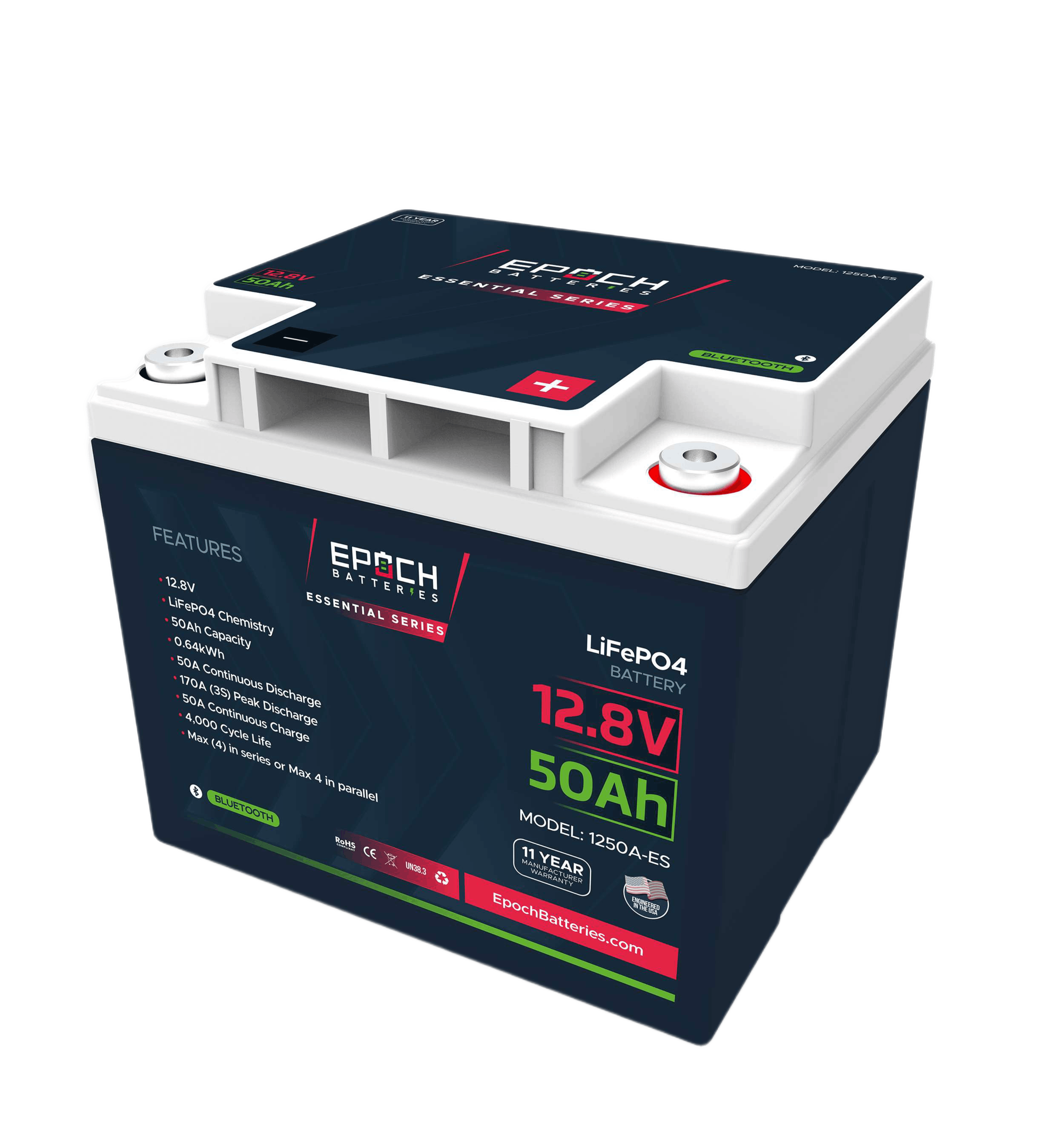
Which battery is recommended for my trolling motor?
Motor Thrust / Max Amp Draw (A) @ Voltage (V) / Recommended Battery
- 20 lbs / 20A @ 12V / Epoch 12V 50Ah or Epoch 12V 100Ah
- 25 lbs / 25A @ 12V / Epoch 12V 50Ah or Epoch 12V 100Ah
- 30 lb / 30A @ 12V / Epoch 12V 50Ah or Epoch 12V 100Ah
- 45 lb / 42A @ 12V / Epoch 12V 50Ah or Epoch 12V 100Ah
- 55 lb / 50A @ 12V / Epoch 12V 100Ah
- 70 lb / 42A @ 24V / Epoch 24V 50Ah or Epoch 24V 100Ah
- 80 lb / 56A @ 24V / Epoch 24V 50Ah or Epoch 24V 100Ah
- 101 lb / 46A @ 36V / Epoch 36V 50Ah or Epoch 36V 100Ah
- 112 lb / 52A @ 36V / Epoch 36V 50Ah or Epoch 36V 100Ah
- >112 lb / Up to 120A @ 36V / Epoch 36V 100Ah
Ready to Upgrade Your Trolling Motor Power?
Finding the Best Trolling Motor Battery of 2026 starts with understanding your boat's power requirements, fishing habits, and desired runtime. The right battery can provide dependable performance, consistent power output, and the confidence to stay on the water longer.
Modern lithium batteries offer lightweight design, longer lifespan, fast charging, and minimal maintenance. Whether you need a 12V, 24V, or 36V setup, choosing a high-quality battery helps maximize trolling motor efficiency and improve your overall fishing experience.
ANY QUESTION?
For all your questions on all things fishing, check us out on our blog https://www.epochbatteries.com or reach out to us here.