
Introduction
Whether you're planning weekend camping trips or living full-time on the road, your battery system is the heart of your RV, van, or camper setup. It powers everything from lights and refrigerators to laptops, water pumps, and off-grid appliances.
Choosing the right battery can make the difference between a reliable adventure and frequent power issues.
Many RV owners still use traditional lead-acid batteries, but modern lithium battery technology is changing the way travelers power their vehicles. Lithium batteries offer longer lifespan, faster charging, lighter weight, and greater usable capacity. This guide explains how to choose the best lithium battery and build a dependable power system for your RV, van, or camper.
What Are the Different Types of RV, Van & Camper Batteries?
Your battery bank stores energy and supplies power when shore power or generators are unavailable. The type of battery you choose affects performance, charging speed, maintenance requirements, and overall operating costs. Understanding the main battery categories helps you make a smarter investment.
Key Battery Types
The most common battery types used in RVs and vans include:
- Flooded Lead-Acid Batteries
- AGM Batteries
- Gel Batteries
- Lithium Iron Phosphate (LiFePO4) Batteries
Each option has different strengths, but lithium batteries have become the preferred choice for modern off-grid travel because of their efficiency and lifespan.
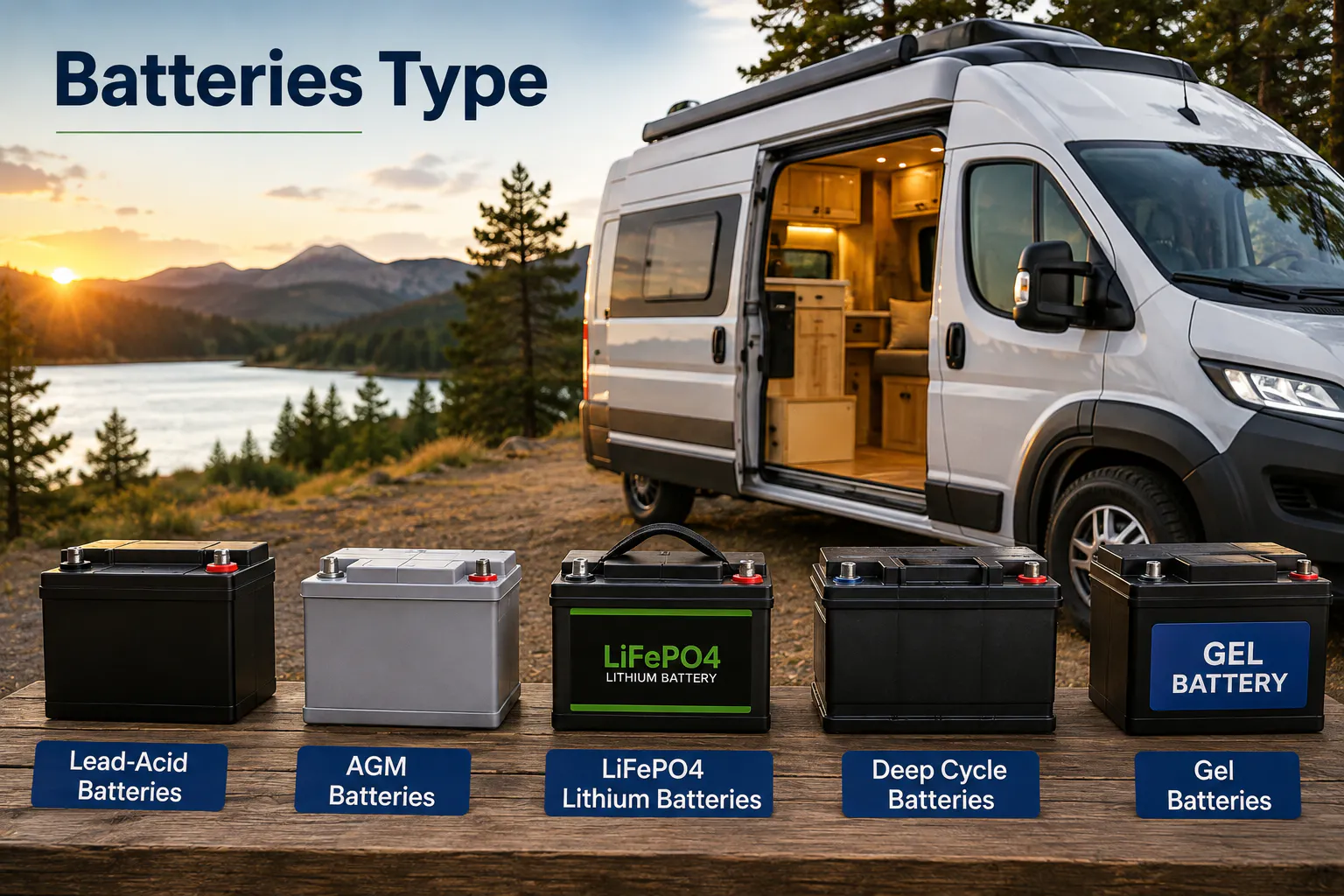
Lead-Acid vs AGM vs Lithium (LiFePO₄) Batteries: Features & Benefits
Lead-acid batteries are affordable but require regular maintenance and provide only about 50% usable capacity.
AGM batteries are maintenance-free and perform better than traditional lead-acid models, but they are still heavier and less efficient than lithium options.
Lithium batteries can deliver up to 80-100% usable capacity, charge faster, and often last more than 4,000 charge cycles.
According to the U.S. Department of Energy, lithium battery technology offers significantly higher energy density than traditional lead-acid systems, making it ideal for mobile power applications.
Battery Comparison: Lead-Acid vs. AGM vs. Lithium (LiFePO₄)
No. | Feature | Lead-Acid | AGM | Lithium (LiFePO₄) |
|---|---|---|---|---|
1 | Usable Capacity | 50% max | 50% max | 80–100% |
2 | Cycle Life | 300–700 cycles | 400–1,000 cycles | 3,000–6,000+ cycles |
3 | Weight | Heavy | Heavy | Much lighter |
4 | Charging Speed | Slow | Moderate | Fast |
5 | Voltage Stability | Moderate | Good | Excellent |
6 | Solar Charging | Good | Good | Excellent |
7 | High-Power Loads | Fair | Good | Excellent |
8 | Cold-Weather Charging | Generally easier | Generally easier | Requires temperature protection/BMS |
9 | Best For | Budget-conscious, occasional camping | Weekend/seasonal RV use | Full-time RVing, vans, campers & frequent off-grid use |
Which Is the Best Lithium Battery for Your RV?
The best RV lithium battery is one that matches your daily energy consumption. Many RV owners choose 12V/24V/36V lithium batteries ranging from 100Ah to 460Ah depending on their setup. Larger battery banks provide extended runtime for refrigerators, air conditioning systems, and entertainment devices.
Key Factors to Consider:
- Battery capacity (Ah)
- 3,000-6,000+ cycle lifespan
- Charging speed
- Built-in Battery Management System (BMS)
- Bluetooth monitoring features
How Do I Choose the Best Deep Cycle Battery for My RV or Camper?
A deep cycle battery is designed to deliver steady power over long periods. Lithium deep cycle batteries outperform lead-acid models because they maintain voltage more effectively and recover faster after charging.
8 Important Factors to Evaluate:
- Select the battery chemistry
- Daily power consumption
- Appliance runtime requirements
- Available charging sources
- Evaluate cycle life
- Consider weight and space
- Future power expansion needs
- Check BMS and safety features
This approach helps prevent underpowered systems and unnecessary upgrades later.
How to Size and Build an Off-Grid RV Battery System?
Sizing an off-grid RV battery system starts with calculating your daily energy consumption and determining how much backup power you need.
A properly designed system should provide enough usable energy for your appliances while working efficiently with solar panels, alternator charging, and other power sources.
Battery Bank Sizing
Battery bank sizing begins with understanding daily energy usage. A typical weekend camper may consume 1-2 kWh of electricity per day, while a full-time van life setup can easily use 3-6 kWh daily depending on appliances and climate control systems.
A properly sized battery bank provides:
- Longer runtime
- Better system efficiency
- Reduced battery stress
- Improved emergency backup power
Build a Reliable Van Battery System
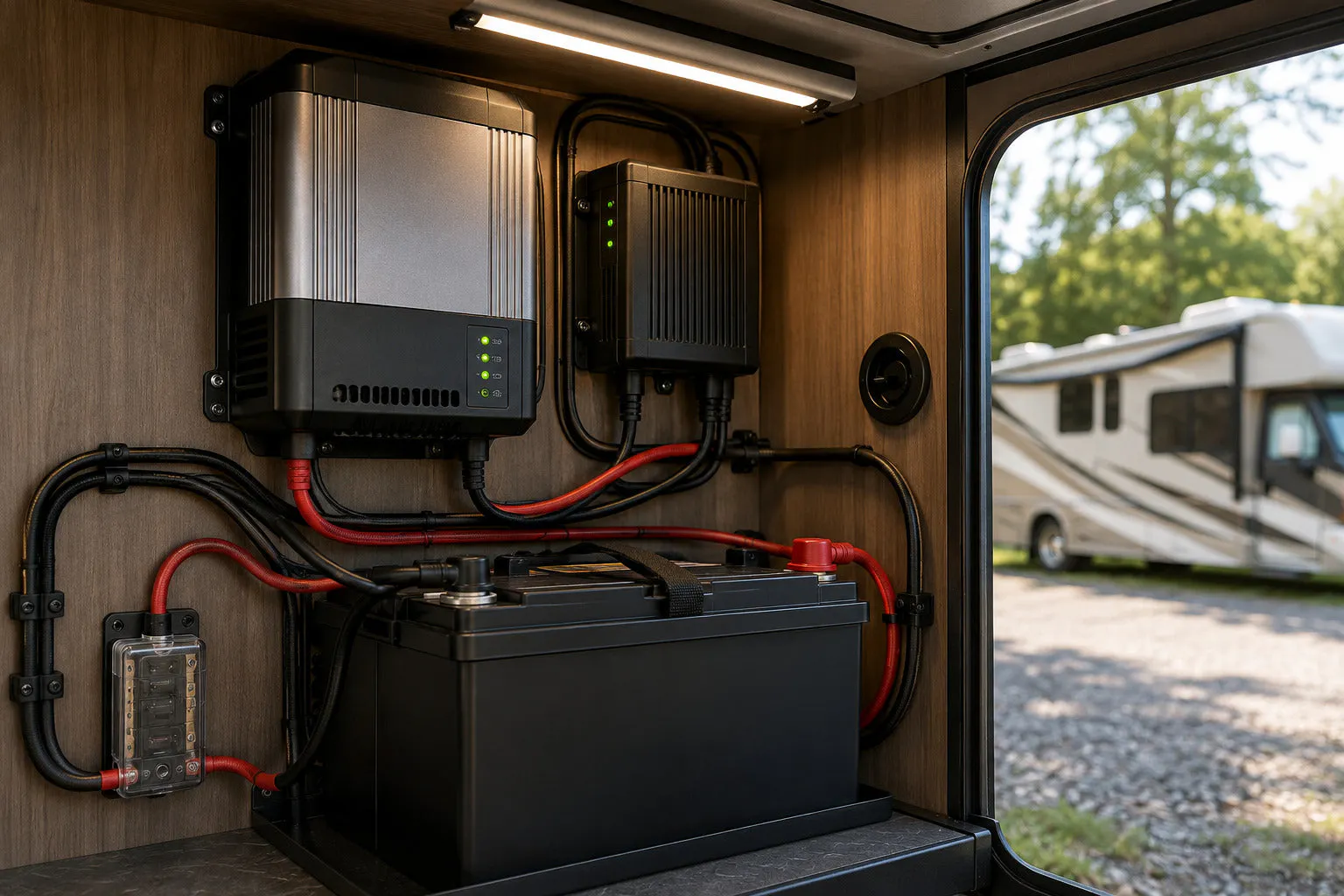
A reliable van battery system requires several components working together to generate, store, manage, and safely distribute power for off-grid use.
An essential battery system includes:
- Lithium battery bank for energy storage
- Solar panels for renewable charging
- Solar charge controller to regulate solar power
- DC-DC charger for charging from the vehicle alternator
- Inverter for powering AC appliances
- Battery monitor for tracking voltage, current, and remaining capacity
A properly matched system helps maintain reliable power while traveling without shore power.
Power Requirements for Appliances
Different appliances consume different amounts of energy. Understanding power requirements helps prevent overloads and battery shortages.
Examples of appliance power requirements include:
- LED lights: 5-15 watts
- Laptop: 40-100 watts
- Refrigerator: 40-80 watts
- Coffee maker: 600-1200 watts
- Microwave: 800-1500 watts
Knowing these values helps determine the battery capacity and inverter size required for your setup.
What Charging Systems Are Best for RV and Van Batteries?
A high-quality charging system is just as important as the battery itself. Proper charging extends battery life and improves overall system performance.
Shore Power and RV Converters
An RV converter converts 120V AC shore power to DC for the RV's electrical system while charging the house battery. For lithium batteries, choose a converter with a LiFePO4-compatible charging profile.
Solar Charging
Solar panels provide a convenient way to recharge RV and van batteries while camping off-grid. A solar charge controller regulates the power from the panels and delivers an appropriate charging voltage to the battery.
DC-DC Chargers
DC-DC chargers let your vehicle alternator charge your lithium battery bank safely while you drive. They control voltage and current, which protects the alternator and the battery system.
For van life travelers, a DC-DC charger often serves as one of the most reliable charging sources during long road trips.
What Are the Best Solar Power Solutions for RVs and Vans?
Solar power remains one of the most popular renewable energy sources for RV and van owners. It reduces generator dependence and supports long-term off-grid living.
Solar panels generate electricity for RV batteries, while charge controllers regulate charging and prevent overcharging. LiFePO4 batteries offer 95–99% charging efficiency, faster charging, reduced generator use, and improved off-grid performance compared with many lead-acid systems.
Solar Panels
Solar panels capture sunlight and convert it into electricity for charging your battery bank. Portable and roof-mounted systems are both popular among RV and van owners. A 400W solar array can generate approximately 1.2-2.0 kWh of electricity per day, depending on location, season, weather conditions, and available sunlight hours.
Charge Controllers
Charge controllers regulate electricity flowing from solar panels into batteries. Without a charge controller, batteries can become overcharged and damaged.
MPPT charge controllers are widely recommended because they improve charging efficiency, especially during varying weather conditions.
Solar and Lithium Battery Integration
Lithium batteries typically achieve charging efficiencies of 95-99%, compared to approximately 80-85% for many lead-acid battery systems.
Benefits include:
- Faster charging
- Higher efficiency
- Reduced generator use
- Better off-grid performance
- Longer battery lifespan
Read more about How to Choose the Best LiFePO₄ Batteries for Solar Energy Storage?
How to Monitor and Maintain Battery Performance?
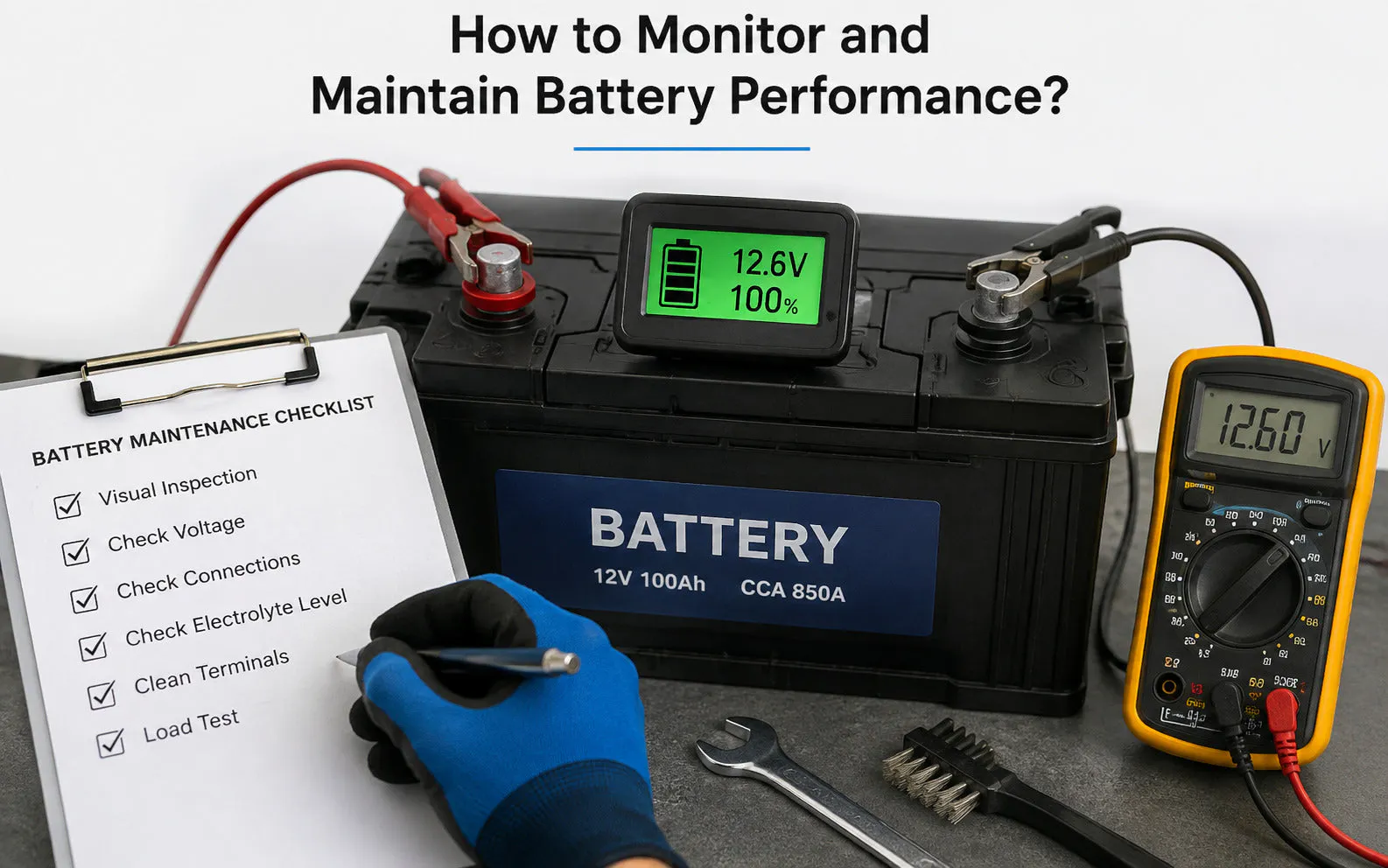
Modern battery monitoring technology makes it easier than ever to track system health and energy usage.
- Monitor battery state of charge: use a battery monitor or shunt to track voltage, current, energy consumption, and remaining capacity.
- Check charging performance: ensure solar, shore power, generators, and DC-DC chargers use battery-compatible charging settings.
- Monitor battery temperature: follow manufacturer temperature limits and use low-temperature protection for LiFePO4 batteries when required.
- Inspect connections and cables: check terminals, cables, fuses, and connections for looseness, corrosion, or damage.
- Track energy consumption: monitor high-power appliances such as microwaves, coffee makers, air conditioners, and inverters to prevent excessive battery drain.
- Use the Lithionics Battery App: monitor voltage, state of charge, temperature, and battery performance in real time to identify potential issues and manage energy efficiently while traveling.
How to Extend RV and Camper Battery Life?
Good care helps your battery last longer and gives you a better return on your money.
Best practices include:
- Avoid extreme temperatures
- Use compatible chargers
- Monitor battery health regularly
- Keep electrical connections clean
- Follow manufacturer recommendations
These simple habits can help lithium batteries deliver years of reliable service.
Ready to Upgrade Your RV Power System?
A high-performance lithium battery system can transform the way you travel, camp, and live off-grid. Compared with traditional lead-acid batteries, lithium technology offers longer lifespan, faster charging, greater usable capacity, and improved reliability.
Whether you're building a van life setup, upgrading an RV electrical system, or preparing for extended off-grid adventures, choosing the right lithium battery, charger, inverter, and solar solution will help you stay powered wherever the road takes you. Investing in a properly designed power system today can deliver years of dependable performance and greater freedom on every journey.


