 Loading page content, please wait...Loading page content, please wait...Loading page content, please wait...
Elite Series
Choose your configuration:
We're here to help! Give us a call and talk with a US-based technical expert.

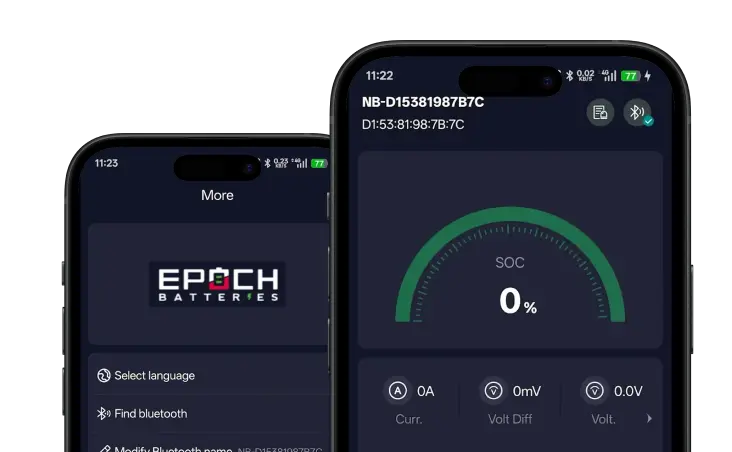
Connect over Bluetooth to track exactly what your battery is doing in real time. No guesswork, no extra hardware.


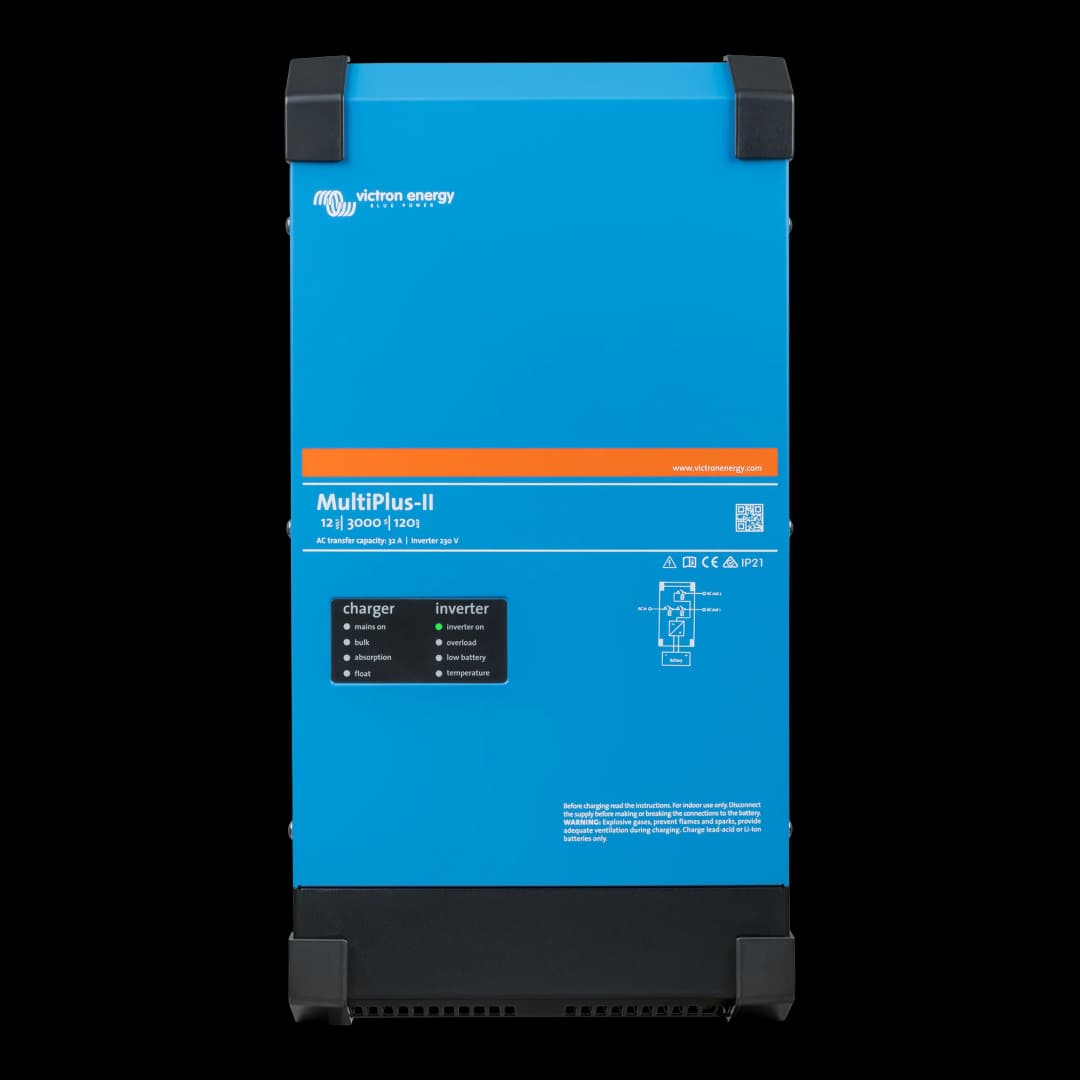
Native Victron communication means seamless monitoring and control across your GX devices, so the battery is fully Victron Ready out of the box.
Real-world examples with a single 5.89kWh battery.
Run times are estimated and may vary based on usage and conditions.
Class-T protection · Victron CAN · Heated · Bluetooth
A premium 5.89kWh lithium battery for advanced marine, RV, Victron, and 24V off-grid solar systems.
The Epoch 24V 230Ah V2-T Elite is a high-capacity 24V 230Ah LiFePO4 battery engineered around a user-serviceable 300A Class-T fuse, native Victron CANBus communication, internal heating, Bluetooth monitoring, and an IP67 enclosure. Its 5.89kWh energy platform gives system builders a compact, managed battery for demanding marine house banks, RV power systems, and professional off-grid energy storage.
Premium 24V storage with source protection, managed communications, and scalable architecture.
The V2-T platform is intended for deep-cycle house-power and energy-storage service rather than engine starting. One battery provides 230Ah at 25.6V nominal and supports large 24V loads without the complexity of wiring several smaller batteries in parallel.
The integrated fuse, CAN communication, remote gauge, external power control, heating, and Bluetooth monitoring reduce installation clutter—but installers must still provide the main disconnect, properly selected downstream overcurrent protection, branch fusing, busbars, conductors, securement, precharge where required, and a complete commissioning plan.
High-interrupt source protection, managed BMS safeguards, and a sealed serviceable enclosure.
The built-in Eaton JJN-300 provides a published 20kA interrupt rating at 160VDC and is accessible through the protected fuse-service area. It reduces fault energy at the battery outlet, saves external fuse-block space, and simplifies the source connection. It does not eliminate the need for downstream cable and branch protection.
The embedded BMS supervises cell voltage, current, temperature, protection events, and balancing. Epoch publishes a UL1973 pack listing along with UL1642, UL9540A, and IEC 62619:2022 cell references, plus CE, RoHS, and fuse-related listing information.
The enclosure is dust-tight and rated for temporary immersion up to 1 meter for up to 30 minutes when every seal and gland is correctly installed. Treat IP67 as an ingress-protection test rating—not permission for permanent submersion, standing-water installation, or pressure washing.
Managed Victron charging, cold-weather operation, and real-time battery visibility.
The BMS communicates at 500kbit/s through the specified battery harness. A correctly configured Cerbo GX or Ekrano GX can use Epoch as the controlling BMS and battery monitor with DVCC enabled, allowing the battery to publish managed operating data and charging limits to the Victron system.
The 153.6W heater is controlled by the BMS. Low-temperature charging is blocked until the cells are within a safe range; the manual lists heater activation at 5°C and deactivation at 10°C during charging.
Monitor state of charge, cell voltage, temperature, cycles, and health alerts through Epoch's app. The included remote digital gauge and external power button provide local access without opening the battery compartment.
High-capacity standalone power with supported series or parallel expansion.
A single battery supports 115A continuous discharge—approximately 2.94kW of nominal DC output before inverter losses. Epoch positions the battery for properly engineered 3,000W-class inverter systems, substantial marine hotel loads, high-thrust trolling-motor applications, and off-grid household loads.
Scale to sixteen batteries in parallel for approximately 94.2kWh at 24V nominal, or use up to two matched batteries in series for a 48V nominal string. Mixed series-parallel banks are not supported.
Marine, Victron, RV, solar, off-grid, and high-capacity 24V power systems.
Professional-grade source protection, communications, monitoring, and environmental capability.
Complete the installation with approved mounting, communications, charging, distribution, and service components.
A built-in Class-T fuse supports system safety—but compliance applies to the complete installation.
Installers searching for an ABYC-compliant marine battery system should evaluate the full design rather than the battery alone. Disconnect accessibility, source and branch protection, unfused conductor length, cable ampacity, securement, ignition-protection requirements, grounding, labeling, compartment conditions, and commissioning must all be addressed under the applicable standards and vessel design.
Electrical ratings, Class-T fuse data, communications, dimensions, heating, BMS protection, and charging settings.
| Identification | |
|---|---|
| Brand | Epoch Batteries |
| Product | 24V 230Ah V2-T Elite Series LiFePO4 Battery |
| Model / SKU | C24230A-A |
| Series | Epoch V2-T Elite Series |
| Battery duty | Deep-cycle house power and energy storage; not an engine-starting battery |
| Chemistry | LiFePO4 / lithium iron phosphate |
| Cell configuration | 8S1P |
| Published warranty | 11-year manufacturer warranty |
| Voltage and Capacity | |
| Nominal voltage | 25.6V |
| Rated capacity | 230Ah |
| Standard stored energy | 5.888kWh / approximately 5.89kWh |
| Manual planning maximum voltage | 29.0V |
| Manual planning minimum voltage | 20.8V |
| Operating state of charge | 0–100% |
| Internal resistance | ≤16mΩ |
| Self-discharge rate | ≤3% per month |
| Current Ratings | |
| Continuous discharge current | ≤115A |
| Continuous charge current | ≤115A |
| Manual short-duration discharge value | 250A for 5 seconds |
| Manual short-duration charge value | 180A for 5 seconds |
| Live product-page peak references | 250A for 10 seconds in description; 644A for 1 second in specification card |
| Nominal continuous DC output | Approximately 2,944W at 25.6V before inverter losses |
| Charge profile | CC/CV, no equalization; constant current ≤0.5C, constant voltage 3.60V/cell, cutoff ≥0.02C |
| Integrated Class-T Fuse | |
| Fuse type | User-serviceable Eaton Class-T source fuse |
| Fuse model | Eaton JJN-300 |
| Amperage rating | 300A |
| Interrupt rating | 20kAIC at 160VDC |
| Voltage rating | 300VAC / 160VDC |
| Short-circuit recovery | Replace approved fuse after fault diagnosis and controlled isolation |
| System-design limitation | Internal source fuse does not replace the main disconnect, downstream conductor protection, or branch protection |
| Series, Parallel and Communications | |
| Supported standalone use | Yes |
| Series connections | Up to 2 identical C24230A-A batteries |
| Parallel connections | Up to 16 identical C24230A-A batteries |
| Mixed series-parallel | Not supported |
| Maximum parallel energy | Approximately 94.2kWh nominal with 16 batteries |
| Battery communication | Bluetooth 4.0 and CAN-bus 500kbit/s |
| Victron integration | Compatible GX device using the specified BMS communication harness and DVCC configuration |
| Network layout | Daisy-chain; no branches or tee connections |
| Recommended Charging Settings | |
| Non-Victron absorption voltage | 28.4V |
| Absorption time | 15 minutes per battery |
| Float voltage | 27.0V |
| Equalization | Off / disabled |
| Temperature compensation | Disabled |
| Victron setup | Configure BMS-Can or VE.Can as instructed, enable DVCC, select Epoch as controlling BMS and battery monitor |
| Backup source programming | Program MultiPlus, Quattro, MPPT, and other charge sources to the same safe values in case CAN communication is lost |
| Temperature and Heating | |
| Manual charge temperature range | 0°C to 50°C / 32°F to 122°F, with heating support |
| Manual discharge temperature range | -20°C to 50°C / -4°F to 122°F |
| Storage, one month or less | -20°C to 45°C / -4°F to 113°F |
| Storage, one year or less | 0°C to 35°C / 32°F to 95°F |
| Heater power | 153.6W |
| Heater voltage | 29.2VDC |
| Charge low-temperature protection | 0°C, with heating |
| Heater activation during charging | 5°C |
| Heater deactivation during charging | 10°C |
| Discharge low-temperature protection | -20°C |
| Mechanical | |
| Dimensions | 20.86 × 8.65 × 12.06 in / 529.8 × 219.8 × 306.3mm |
| Weight | 98.9 lb / 45.86kg |
| Case material | PC + ABS, UL94 V-0 |
| Terminals | M8 bolts |
| Terminal torque | 12N·m / 8.85lb-ft |
| Cooling | Passive convection |
| Ingress protection | IP67; dust-tight and temporary immersion ≤1m for ≤30 minutes with all seals/glands installed |
| Rated pressure | 86–106kPa |
| BMS Protection Values | |
| Charge overcurrent protection | 180A ±2A with 5-second delay |
| Discharge overcurrent protection | 250A ±2A with 5-second delay |
| Charge high-temperature protection / release | 55°C / 53°C |
| Charge low-temperature protection / release | 0°C / 5°C with heating |
| Discharge high-temperature protection / release | 55°C / 53°C |
| Discharge low-temperature protection / release | -20°C / -17°C |
| Balancing and monitoring | Embedded BMS supervises cell voltage, current, temperature, protection, and balancing behavior |
| Lifecycle and Published Listings | |
| Live product-page cycle rating | 4,000+ cycles |
| Controlled manual test value | >3,500 cycles at 25°C, 0.5C charge, 1C discharge, and 70% DOD |
| End-of-life test capacity | 70% |
| Published pack listing | UL1973 |
| Published cell listings / standards | UL1642, UL9540A, IEC 62619:2022 |
| Other published compliance | CE and RoHS |
| Published fuse-related listing | UL60691 fuse component listed on product page |
Rating note: Epoch's live product page and the March 2026 controlled installation manual publish a few different short-duration current and cycle-life values. The manual states that the installed battery's current product label or released datasheet governs when values differ. Verify the physical label and latest model-specific datasheet before final engineering.
Secure the battery first, then engineer conductors, protection, precharge, charging, communications, and documentation.
Install on a flat rigid surface with service access to terminals, the fuse area, switch, and communication ports. Use approved restraints, short protected source conductors, appropriate busbars and lugs, controlled precharge for large capacitive loads, and equal-length conductors in parallel banks. Commission Victron communications, DIP settings, current limits, charging voltages, alarms, and module counts before placing loads into service.
Common questions about the Class-T fuse, Victron setup, heating, IP67 protection, inverter sizing, and bank expansion.
The T identifies the integrated Class-T source fuse. The C24230A-A uses a user-serviceable Eaton JJN-300 rated at 300A with a published 20kA interrupt rating at 160VDC. This high-interrupt fuse reduces fault energy at the battery outlet and saves installation space, but it does not replace the main disconnect, downstream conductor protection, branch fusing, or the rest of a code-compliant system design.
No. The fuse is replaceable through the protected service-access area. Isolate every source and load, open the main disconnect, verify the system is de-energized, identify and correct the fault, and replace the fuse only with the exact approved model and rating. Restore all covers and seals before returning the battery to service; qualified service is strongly recommended.
Yes, when installed with Epoch's specified communication harness and configuration. The battery communicates at 500kbit/s over CAN. Connect the designated grey RJ45 lead to the appropriate BMS-Can or configurable VE.Can port on a compatible Cerbo GX or Ekrano GX, set the port as instructed, enable DVCC, and select Epoch as the controlling BMS and battery monitor. Do not assume every generic RJ45 cable has the required battery-side pinout.
The current controlled V2-T installation manual supports up to two C24230A-A batteries in series or up to sixteen in parallel. Mixed series-parallel arrangements are not supported. Use identical batteries, closely match their open-circuit voltage before connection, use the prescribed DIP-switch and communication layout, and follow Epoch's current manual for the selected topology.
Sixteen 5.888kWh batteries provide approximately 94.2kWh of nominal stored energy and 3,680Ah at 24V nominal. Every battery output is a separate source and requires an engineered connection to common busbars, equal-length conductors, appropriate source and branch protection, secure mounting, communication configuration, and professional commissioning.
The battery includes a 153.6W heater controlled by the BMS. The controlled manual lists low-temperature charge protection at 0°C, heater activation during charging at 5°C, and heater deactivation at 10°C. Available incoming charge energy warms the cells before normal charging proceeds. Charging equipment must still be programmed correctly and provide enough current for heating and charging.
The enclosure is IP67 rated—dust-tight and tested for temporary immersion up to 1 meter for up to 30 minutes when all seals and glands are correctly installed. IP67 is not permission for permanent submersion, pressure washing, or installation in standing water. Epoch's manual says a battery exposed to immersion, severe impact, damaged seals, or other abnormal conditions should be removed from service until evaluated.
At 25.6V nominal and 115A continuous discharge, the battery provides approximately 2.94kW of nominal DC output before inverter losses. Epoch markets it for properly engineered 3,000W-class systems. Final inverter sizing must account for efficiency, surge demand, cable voltage drop, ambient temperature, precharge requirements, downstream protection, and the battery's current limits.
No single component makes an entire installation ABYC compliant. The integrated high-interrupt Class-T fuse can support an ABYC-conscious marine protection design, but compliance depends on the complete system—including disconnect location, unfused conductor length, conductor ampacity, overcurrent protection, ignition-protection requirements where applicable, securement, routing, labeling, grounding, and qualified installation.
Epoch's app provides real-time visibility into state of charge, cell voltage, temperature, charge and discharge cycles, and system-health alerts. The local meter and external gauge provide additional physical status access. In a Victron-managed system, the GX device becomes the central view for battery and system data.
The controlled manual lists the C24230A-A at 20.86 inches long by 8.65 inches wide by 12.06 inches high, with a weight of 98.9 pounds. It uses M8 terminals with a published terminal torque of 12N·m (8.85lb-ft). Confirm compartment clearance, service access, cable bend radius, and mounting hardware before ordering.

Every mark below is a standard this battery has been tested against or a listing it carries. Here is what each one covers, in plain English.
Ingress protection
Dust-tight, and protected against temporary immersion in up to 1 m of water for 30 minutes. Under IEC 60529 the first digit rates solids and the second rates water.
IEC 60529, Degrees of protection provided by enclosures
Stationary storage safety
The UL standard for batteries in stationary energy storage and auxiliary power. It covers the pack, its BMS and how the system behaves under fault conditions.
UL 1973, Batteries for use in stationary and motive auxiliary power applications
Hazardous substances
Complies with the EU Restriction of Hazardous Substances directive, which limits lead, mercury, cadmium and other toxic materials in electronics.
Directive 2011/65/EU, Restriction of hazardous substances
EU conformity
The manufacturer's declaration that the product meets the European Union's health, safety and environmental requirements, which is required to sell it in the European Economic Area.
CE marking, EU declaration of conformity
| Model | Capacity | Energy | Weight | Bluetooth | Heating | Victron Ready |
|---|---|---|---|---|---|---|
| 12V 460Ah Elite | 460Ah | 5.89 kWh | 97 lbs | Yes | Yes | Yes |
| 24V 230Ah EliteThis model | 230Ah | 5.89 kWh | 97 lbs | Yes | Yes | Yes |
| 48V 100Ah Elite | 100Ah | 5.12 kWh | 97 lbs | Yes | Yes | Yes |